
CEESD 2026 Speakers

The Hong Kong Polytechnic University, Hong Kong, China
Title of Speech: AI-Driven Sector Coupling and Advanced Technologies for Sustainable Urban Energy Systems
Abstract: Achieving urban carbon neutrality demands a transition from siloed infrastructure to intelligent multi-energy ecosystems. This talk explores pathways to accelerate urban decarbonization by combining AI-driven sector coupling with advanced clean technologies. At the systems level, artificial intelligence and digital twin platforms synchronize power, transportation, buildings, and data networks—optimizing renewable asset deployment, demand forecasting, and climate resilience. In parallel, breakthroughs in advanced materials and passive energy systems deliver critical operational footprint reductions. Bridging digital intelligence with physical innovations, this session presents a scalable framework for deploying resilient, low-carbon urban energy infrastructure aligned with global sustainable development goals.
Biography: Professor Jerry Yan is an academician of the European Academy of Sciences and Arts, Fellow of the Hong Kong Academy of Engineering Sciences, Chair Professor at The Hong Kong Polytechnic University, and Director of the International Centre of Urban Energy Nexus (UEX). His research interests include renewable energy, advanced energy systems, climate change mitigation, and related environment and policy. Prof. Yan has published 500+ papers in Science, Nature Energy, Nature Climate, etc., and holds 10+ patents. He has supervised nearly 200 post-docs and 50 PhDs, and currently supervises 30+ PhD students. As PI, Prof. Yan has received external grants from research foundations and industry totaling more than 20+ MEuro in the past decade. He has led the research platform Future Energy Profile with 10 MEuro from the Swedish Knowledge Foundation and industrial partners. Prof. Yan received his PhD from the Royal Institute of Technology (KTH) (1991) and was Chair-Professor and Head of the Energy Department at Luleå University of Technology, Sweden (2001). He also served as Chair-Professor at Mälardalen University and KTH, Sweden, and Director of Future Energy Profile. He is founding Editor-in-Chief of Advances in Applied Energy (Elsevier, Impact Factor 13.8) and founding Editor-in-Chief of Nexus (Cell Press), and Advisory Editor-in-Chief of Applied Energy (Elsevier, Impact Factor 12.0). He is the founder of international platforms, e.g., ICAE, UNiLAB, iCET, EnergyVision, EnerarXiv, and EP. Prof. Yan has received several awards, including the Global Human Settlements Award of Green Technology (2014) supported by UNDP; finalist for the SWFF (Securing Water for Food: A Grand Challenge for Development, by USAID, Sweden, and the Netherlands, 2015); the Energy Islands' Award (European Union 2017); Research2Business Top100 (2020, Swedish Royal Academy of Engineering Sciences); CoverPeople, Famgang (Swedish magazine, 2021); Highly Cited Researcher (2019, 2021, 2023-2026 WoS/ISI); and the IAGE Lifetime Achievement Award (2023 International Association of Green Energy).
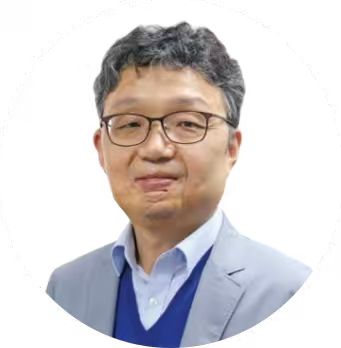
University of Seoul, South Korea
Title of Speeach: Management of environmental microplastics: Should it be based on particle counting or mass?
Abstract: Microplastics have emerged as a global environmental challenge, yet their regulation faces a fundamental dilemma: should management standards be based on particle count or mass? We are honored to invite Professor Hyunook Kim from the Department of Environmental Engineering at the University of Seoul to provide an in-depth analysis of this critical issue. As an international authority in environmental technology, Professor Kim leads several national research initiatives on post-plastic era strategies. With extensive expertise in water treatment and analytical technologies, he has directed nearly 200 R&D projects. His presentation will thoroughly examine the far-reaching impacts of different metrics on risk assessment, policy regulation, and treatment technologies. By integrating his cutting-edge research findings and international standardization experience, the talk will offer key insights for developing a scientific framework for future microplastic management.
Biography: Dr. Hyunook Kim is a Professor in the Department of Environmental Engineering at the University of Seoul and currently serves as Director of graduate programs focused on Post-Plastics, Climate Change Adaptation, and Carbon Neutrality. Prior to joining the University in 2002, he worked as an Environmental Engineer at the U.S. Department of Agriculture’s Agricultural Research Service. He holds a B.S. in Environmental Engineering from Yonsei University, an M.S. from Johns Hopkins University, and a Ph.D. from the University of Maryland. Dr. Kim's research centers on smart water and wastewater management as well as sustainable environmental and energy technologies. He has served on the Korean government’s National Science and Technology Advisory Board and holds editorial positions in leading journals such as Water-Energy Nexus, Chemosphere, and Frontiers in Environmental Chemistry. He is also actively involved in international standardization and currently chairs the Korean Mirror Committee for ISO/TC 224. He has published over 200 peer-reviewed journal papers, holds 92 national and international patents, and has completed approximately 200 R&D projects. His contributions have earned him numerous academic and professional awards, including Korea’s National Medal of Honor for advancing environmental science and policy.
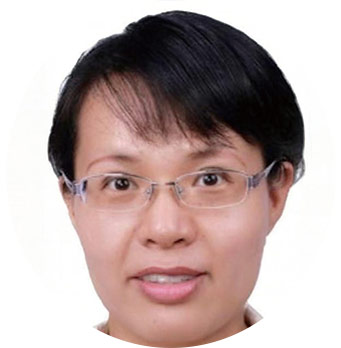
Visiting Researcher of Sophia University, Japan
Title of Speeach: How do power systems meet rising electricity demand? The role of inherited generation structures: global evidence from 179 economies, 2000-2024
Abstract: TBD
Biography: Dr. Lihui Zhou is a researcher specializing in energy transition, climate policy, and environmental governance. She holds doctoral degrees in Global Environmental Studies and Social Development and was a postdoctoral researcher at the Graduate School of Economics, Sophia University, Japan.
Her research focuses on power-sector decarbonization, renewable energy transitions, carbon pricing, and environmental governance from a global comparative perspective. Her work has been published in international peer-reviewed journals and academic volumes.
CEESD Past Speakers
Prof. Gordon Huang
International Society for Environmental Information Sciences
Prof. Rao Y. Surampalli
President and CEO, Global Institute for Energy, Environment, and Sustainability
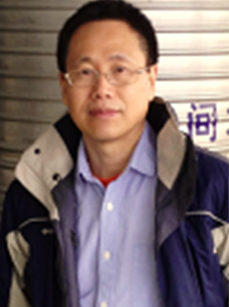
Prof. Baolin Deng
Southern University of Science and Technology, China
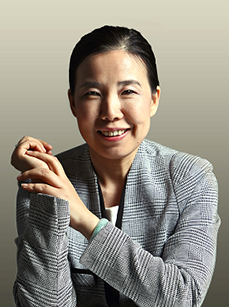
Prof. Yongping Li
Beijing Normal University, China
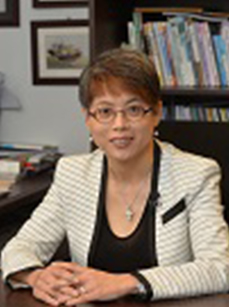
Prof. Irene Man Chi Lo
The Hong Kong University of Science and Technology, Hong Kong S.A.R, China
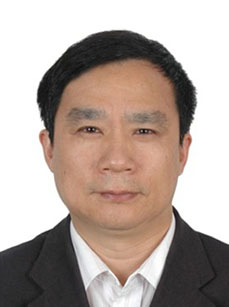
Prof. Xiaohong Chen
Sun Yat-sen University, China
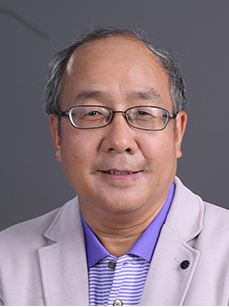
Prof. Qingyun Duan
Hohai University, China
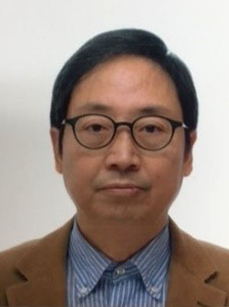
Prof. Guangwei Huang
Sophia University, Japan

Prof. Caterina Valeo
University of Victoria, Canada
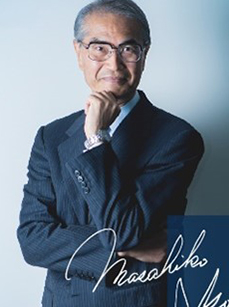
Prof. Masahiko Isobe
Kochi University of Technology, Japan
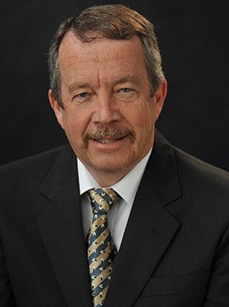
Prof. Ed McBean
University of Guelph, Canada
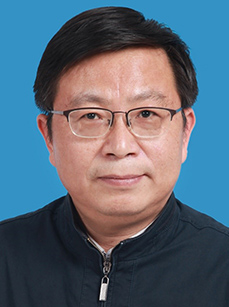
Prof. Yangwen Jia
China Institute of Water Resources and Hydropower Research (IWHR), China
Dr. Chunming Su
United States Environmental Protection Agency, USA
Prof. J. Paul Chen
National University of Singapore (NUS), Singapore
Prof. M L Kansal
Indian Institute of Technology-Roorkee, India
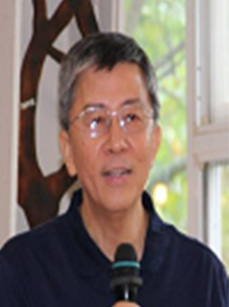
Prof. Hsin Chu
National Cheng Kung University, Taiwan, ROC
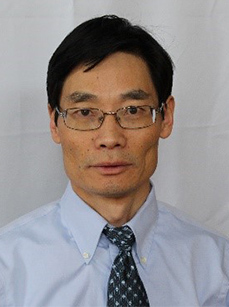
Dr. Zhiwei Zhu
University of Alberta, Canada
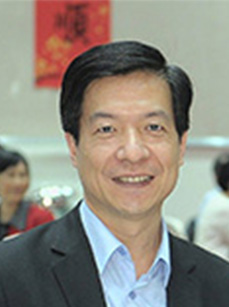
Prof. Shin-Cheng Yeh
National Taiwan Normal University, Taiwan, ROC
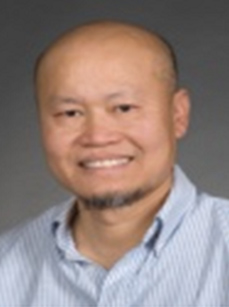
Prof. Solomon W. Leung
Idaho State University, USA
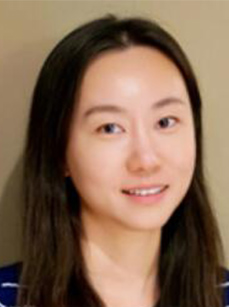
Prof. Yang Liu
University of Alberta, Canada
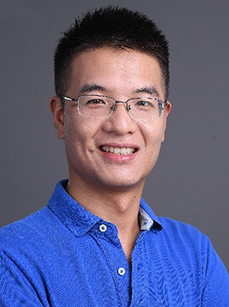
Prof. Chiyuan Miao
Beijing Normal University, China
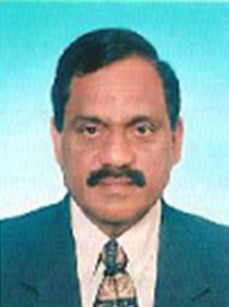
Prof. Agamuthu Pariatamby
University of Malaya, Malaysia
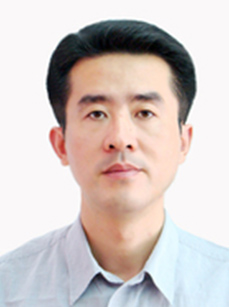
Prof. Yanfeng Zhang
Shanghai University of Engineering Science, China
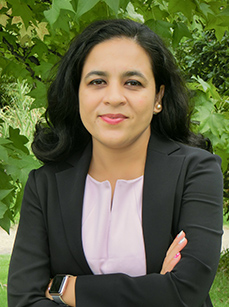
Dr. Anupam Khajuria
United Nations Centre for Regional Development (UNCRD), Nagoya, Japan